Place them in a large pot and cover with cold water.
Bring to a boil and cook until the potatoes are completely tender when pierced with a fork.
This usually takes approximately 20–30 minutes, depending on their size.
Drain and allow the potatoes to cool enough to handle.
Step 2: Peel and Mash the Potatoes
Peel the potatoes while they are still warm.
Pass them through a potato ricer or mash them very finely.
For the best texture, avoid leaving large lumps.
Spread the mashed potatoes out slightly and allow them to cool completely.
Important Tip
Don’t add flour while the potatoes are very hot.
Hot potatoes can absorb too much flour, resulting in heavy, tough dumplings.
Prepare the Plums
Step 3: Remove the Pits
Wash the plums and dry them thoroughly.
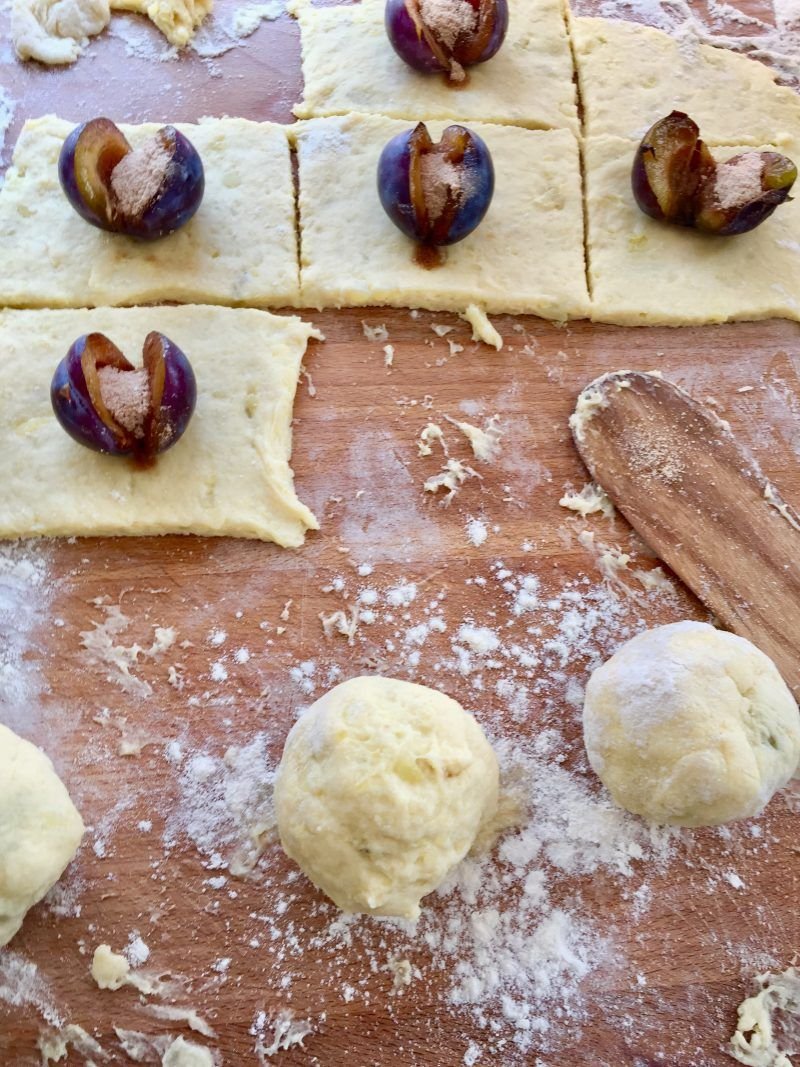
Cut a slit along one side of each plum and remove the pit.
Try to keep the plum mostly intact.
Small Italian or European plums work particularly well.
Step 4: Prepare the Cinnamon Sugar
Mix the granulated sugar and cinnamon in a small bowl.
Place a small amount of the mixture inside each pitted plum.
Close the plum gently.
Make the Potato Dough
Step 5: Combine the Ingredients
Place the cooled mashed potatoes in a large bowl.
Add the egg and salt.
Gradually add the flour.
Mix gently until a soft dough forms.
You may not need the entire amount of flour.
The dough should be soft and workable but not excessively sticky.
Step 6: Knead Briefly
Transfer the dough to a lightly floured surface.
Knead only until it comes together.
Avoid over-kneading.
The less you work the dough, the lighter and more tender the dumplings will be.
Assemble the Plum Dumplings
Step 7: Divide the Dough
Divide the potato dough into approximately 12–16 equal portions, depending on the size of your plums.
Roll each portion into a ball.
Flatten one piece into a small round.
Step 8: Add the Plum
Place one prepared plum in the center.
Carefully bring the dough around the plum.
Pinch the edges together firmly to completely enclose the fruit.
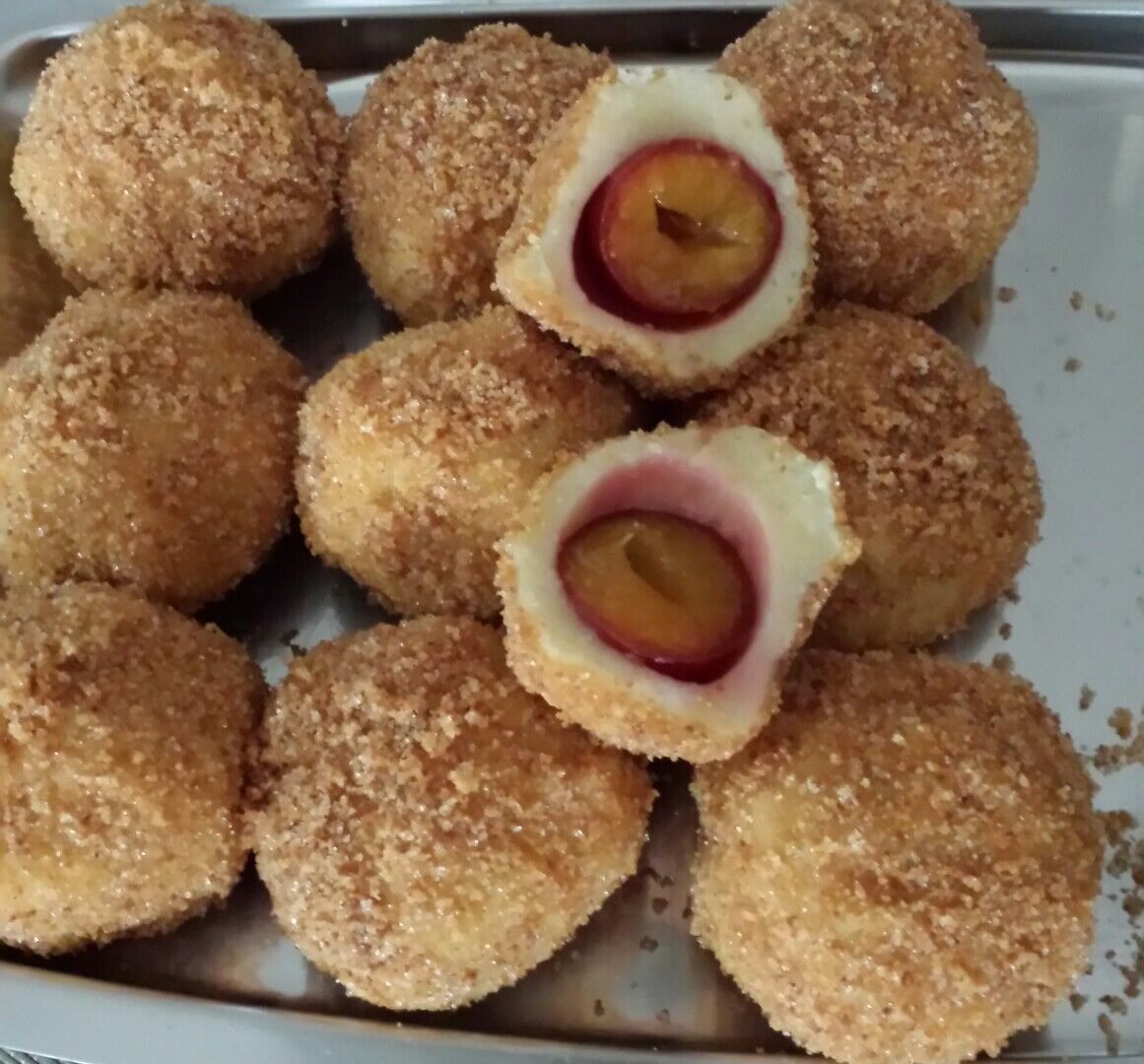
Roll gently between your hands until you have a smooth dumpling.
Make sure there are no holes or exposed fruit.
Repeat with the remaining dough and plums.
Cook the Dumplings
Step 9: Boil the Water
Bring a large pot of lightly salted water to a gentle boil.
The pot should be large enough to allow the dumplings to move freely.
Step 10: Add the Dumplings
Carefully lower several dumplings into the boiling water.
Don’t overcrowd the pot.
Reduce the heat slightly so the water remains at a gentle boil.
Step 11: Cook Until They Float
The dumplings will initially sink.
After several minutes, they will rise to the surface.
Once they float, continue cooking for approximately 3–5 minutes.
Remove them carefully with a slotted spoon.
Prepare the Breadcrumb Coating
Step 12: Toast the Breadcrumbs
While the dumplings cook, melt the butter in a large skillet over medium heat.
Add the breadcrumbs.
Cook for approximately 5–8 minutes, stirring frequently, until the breadcrumbs become golden and fragrant.
Be careful not to burn them.
Step 13: Add Sugar and Cinnamon
Remove the skillet from the heat.
Stir in the sugar and cinnamon.
Mix well.
Coat the Dumplings
Step 14: Roll in the Breadcrumbs
Place the cooked dumplings directly into the toasted breadcrumb mixture.
Gently roll them around until completely coated.
Be careful because the dumplings are soft and delicate.
Serve Hungarian Plum Dumplings
Serve Szilvásgombóc warm.
Dust with powdered sugar and add an extra sprinkle of cinnamon if desired.
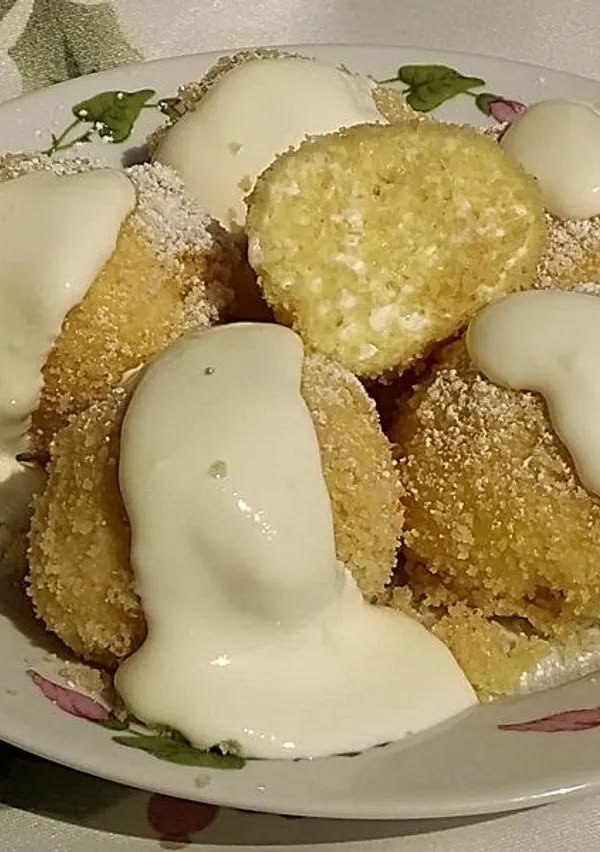
A spoonful of sour cream can also be served alongside them.
Tips for Perfect Szilvásgombóc
Use Starchy Potatoes
Floury potatoes are best because they produce a lighter dough.
Avoid very watery potatoes.
Let the Potatoes Cool
This is extremely important.
Adding flour to steaming-hot potatoes can result in a dough that requires too much flour.
Don’t Add Too Much Flour
The dough should be soft.
Too much flour creates dense and chewy dumplings.
Seal the Dumplings Carefully
Even a small opening can allow the plum juice to escape during cooking.
Make sure the dough completely surrounds each plum.
Don’t Overcrowd the Pot
Cook the dumplings in batches if necessary.
Toast the Breadcrumbs Slowly
Golden brown breadcrumbs provide a huge amount of flavor.
Keep the heat moderate and stir frequently.
What Plums Are Best?
Small, firm-ripe European plums are ideal.
Italian prune plums are particularly good because they have a sweet, slightly tart flavor and hold their shape well.
Avoid extremely soft or watery plums.
Can I Use Frozen Plums?
Yes, but fresh plums are preferable.
If using frozen plums, thaw them completely and drain away excess liquid before wrapping them in the dough.
Can I Make Szilvásgombóc Without Potatoes?
Traditional Szilvásgombóc is made with potato-based dough.
There are other Central European fruit dumplings made with different doughs, but the potato dough is what gives Hungarian plum dumplings their characteristic soft texture.
Can I Use Other Fruit?
Yes.
You can make similar dumplings with:
Apricots
Cherries
Peaches
Plums
Small nectarines
However, plums are the traditional favorite.
Can I Add Sugar Inside the Plum?
Yes.
A little sugar mixed with cinnamon is commonly placed where the pit was.
As the dumpling cooks, the sugar melts into the plum juices and creates a delicious syrupy center.
Can I Make These Ahead of Time?
You can prepare the dumplings ahead of time and keep them refrigerated for a short period before cooking.
Place them on a lightly floured or parchment-lined tray and cover them well.
For the best texture, cook them relatively soon after shaping.
Can Hungarian Plum Dumplings Be Frozen?
Yes.
Arrange uncooked dumplings in a single layer on a tray and freeze until firm.
Transfer them to a freezer-safe bag or container.
Cook directly from frozen, adding a few extra minutes to the cooking time.
Alternatively, freeze cooked dumplings and reheat them gently.
How to Store Leftover Dumplings
Store cooked Szilvásgombóc in an airtight container in the refrigerator for up to 3 days.
Reheat gently in a skillet with a little butter or in the microwave.
For the best texture, refresh the breadcrumbs in a skillet before serving.
Frequently Asked Questions
What does Szilvásgombóc mean?
Szilvásgombóc means plum dumplings in Hungarian.
Are Hungarian plum dumplings a dessert?
Yes, they are commonly served as a dessert, although traditionally they can also be enjoyed as a sweet main course.
Why is my potato dough too sticky?
The potatoes may contain too much moisture, or they may have been used while still hot. Add flour gradually, but avoid adding excessive amounts.
Why did my dumplings fall apart?
The dough may not have been sealed properly, or it may have been too soft. Make sure each plum is completely enclosed.
Why are my dumplings tough?
Too much flour or excessive kneading can make potato dumpling dough tough.
What are the breadcrumbs for?
The butter-toasted breadcrumbs create a delicious crispy coating and provide contrast to the soft dumpling.
Serving Suggestions
Traditional-style Szilvásgombóc can be served with:
Powdered sugar
Cinnamon sugar
Sour cream
Extra toasted breadcrumbs
Vanilla sauce
A small scoop of vanilla ice cream
For a classic presentation, simply dust the warm dumplings with powdered sugar and serve immediately.
Final Thoughts
Hungarian Plum Dumplings (Szilvásgombóc) are a wonderful example of traditional Hungarian home cooking. Simple potatoes, flour, plums, cinnamon, sugar, and breadcrumbs come together to create an incredibly comforting dish.
The tender potato dough surrounds a warm, juicy plum while buttery breadcrumbs provide a golden, slightly crisp coating. Every bite offers a delicious combination of soft, fruity, sweet, and buttery flavors.
Whether you make them during plum season or prepare a batch with frozen fruit, these traditional Hungarian dumplings are a recipe worth sharing with family and friends.
To provide the best experiences, we use technologies like cookies to store and/or access device information. Consenting to these technologies will allow us to process data such as browsing behavior or unique IDs on this site. Not consenting or withdrawing consent, may adversely affect certain features and functions.
Functional
Always active
The technical storage or access is strictly necessary for the legitimate purpose of enabling the use of a specific service explicitly requested by the subscriber or user, or for the sole purpose of carrying out the transmission of a communication over an electronic communications network.
Preferences
The technical storage or access is necessary for the legitimate purpose of storing preferences that are not requested by the subscriber or user.
Statistics
The technical storage or access that is used exclusively for statistical purposes.The technical storage or access that is used exclusively for anonymous statistical purposes. Without a subpoena, voluntary compliance on the part of your Internet Service Provider, or additional records from a third party, information stored or retrieved for this purpose alone cannot usually be used to identify you.
Marketing
The technical storage or access is required to create user profiles to send advertising, or to track the user on a website or across several websites for similar marketing purposes.