Cut the beef into bite-sized cubes and pat it dry with paper towels.
Season lightly with salt and black pepper.
Beef chuck works particularly well because the connective tissue becomes tender during slow cooking.
2. Cook the Onions
Heat the lard or oil in a large heavy-bottomed pot over medium heat.
Add the chopped onions and cook for approximately 8–10 minutes, stirring occasionally, until soft and lightly golden.
Don’t rush this step. Well-cooked onions create an important foundation for the soup.
3. Add the Paprika
Remove the pot briefly from the heat.
Add the Hungarian paprika and stir quickly to coat the onions.
This is an important step because paprika can burn easily and become bitter.
Add a small splash of water if necessary.
4. Add the Beef
Return the pot to low-medium heat.
Add the beef cubes and stir well.
Cook for several minutes until the meat is coated with the paprika and onion mixture.
Add the garlic, caraway seeds, salt, and black pepper.
5. Slowly Simmer the Beef
Add enough water or broth to just cover the beef.
Cover the pot and simmer gently for approximately 60–90 minutes, or until the beef begins to become tender.
Stir occasionally and add a little more liquid if necessary.
6. Add the Vegetables
Once the beef has started becoming tender, add:
Carrots
Parsnip
Celery root
Tomato
Bell pepper
Bay leaves
Add additional broth or water to create a soup-like consistency.
Simmer for another 20 minutes.
7. Add the Potatoes
Add the cubed potatoes.
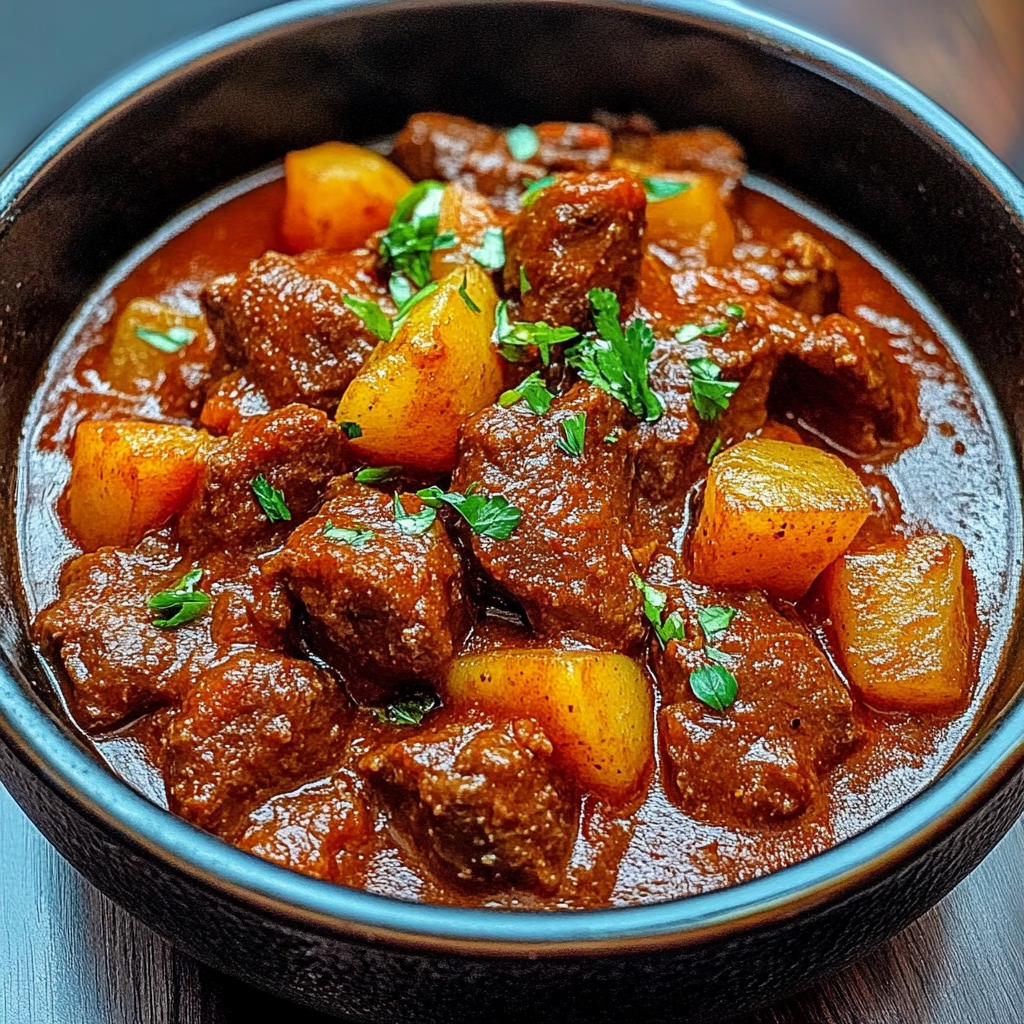
Continue cooking for approximately 20–25 minutes, until the potatoes and vegetables are tender and the beef is completely soft.
Taste and adjust the salt and pepper.
8. Make the Csipetke
If using traditional csipetke, combine the flour, egg, and salt to make a firm dough.
Pinch off tiny pieces with your fingers.
Drop them directly into the simmering soup during the final 5–8 minutes of cooking.
They should become tender but remain slightly chewy.
9. Finish the Soup
Remove the bay leaves.
Stir in the chopped fresh parsley.
Let the soup rest for approximately 5 minutes before serving.
🍲 How to Serve
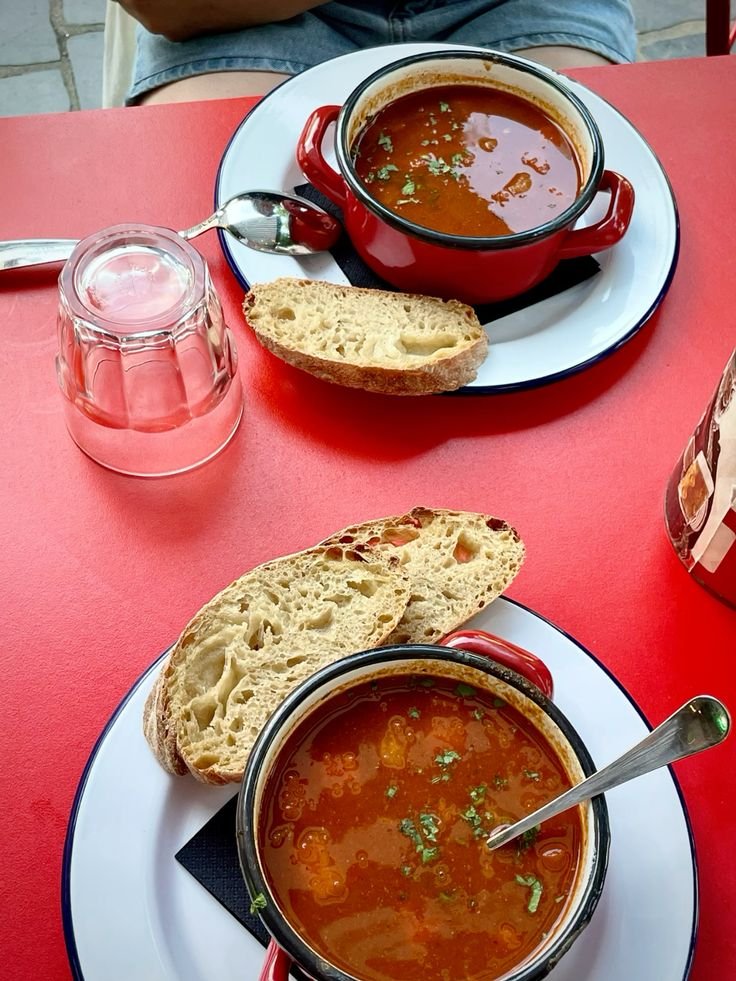
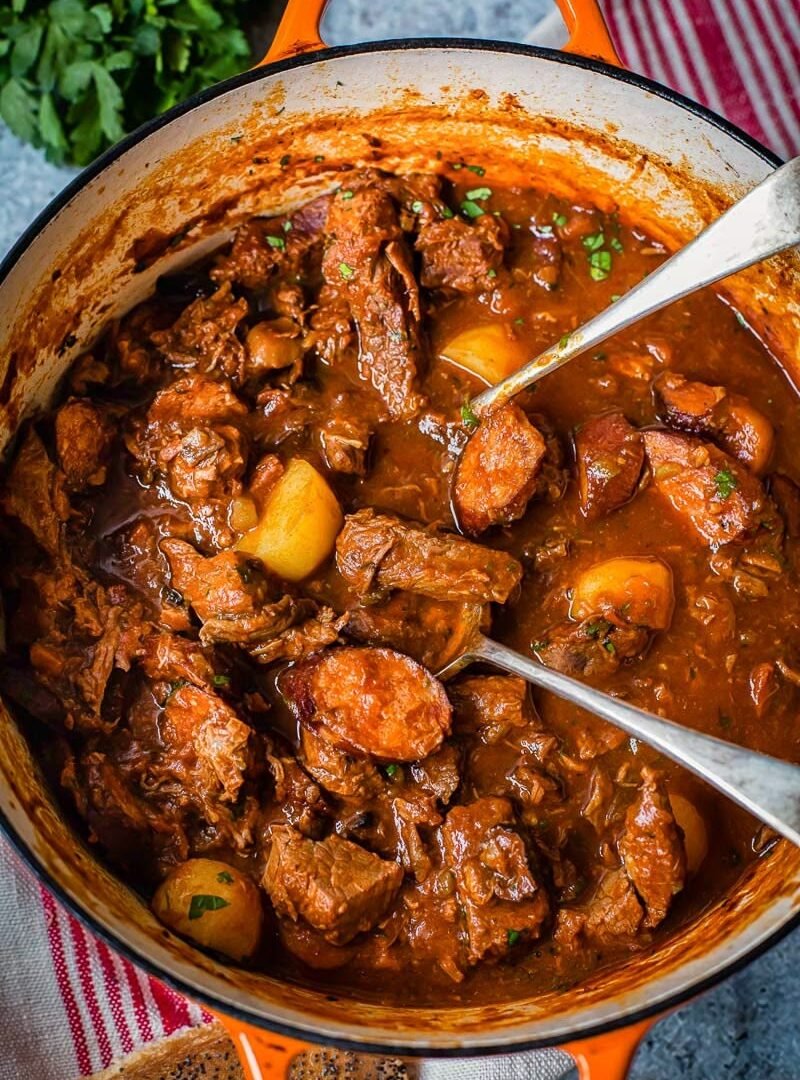
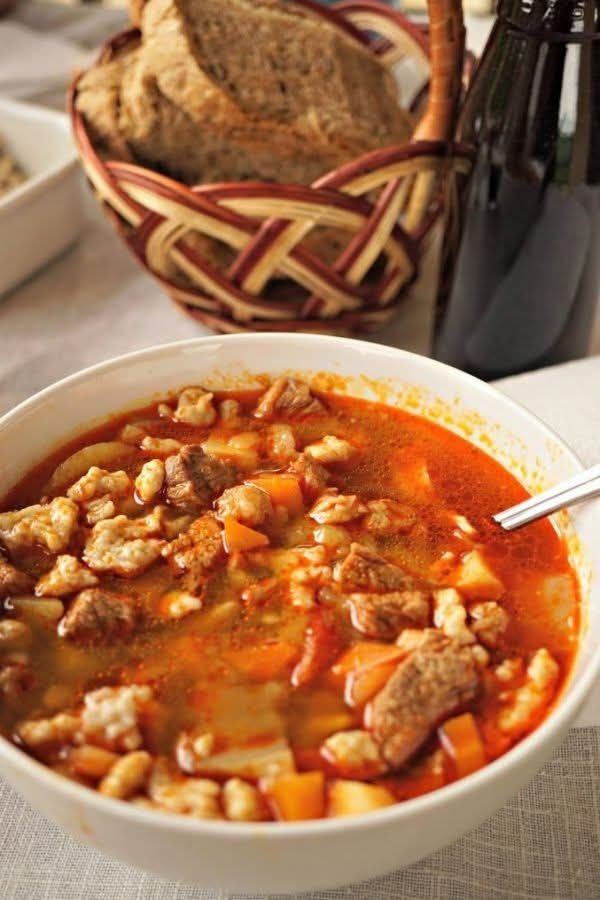
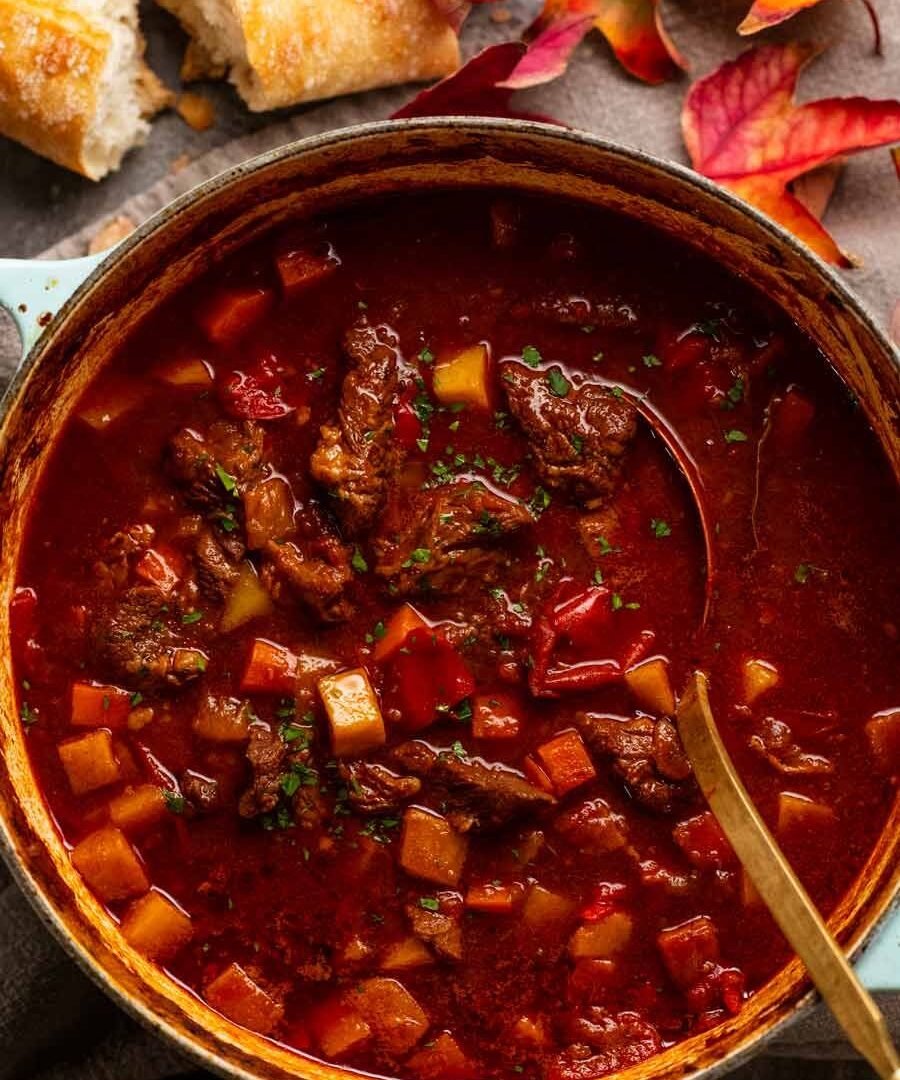
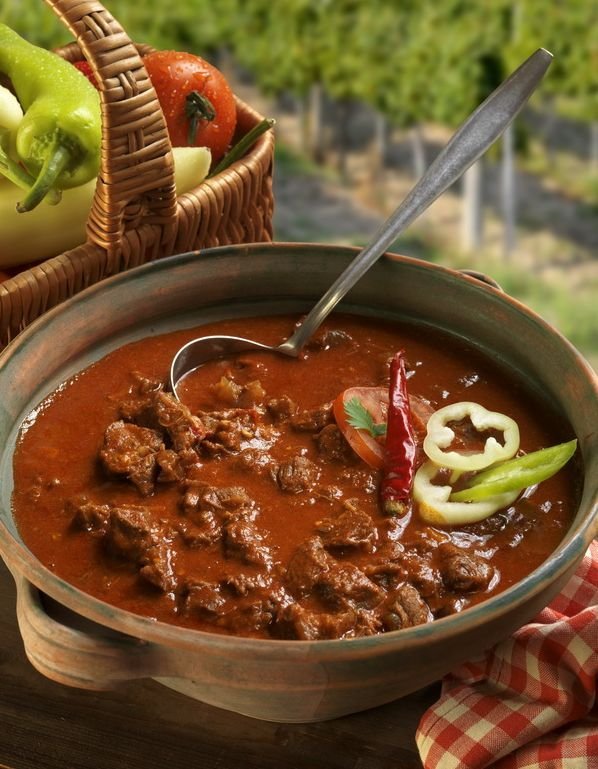
Ladle the hot Gulyásleves into large bowls.
Serve with:
Fresh crusty bread
Hungarian pickles
Pickled peppers
Sour cream
Extra fresh parsley
Hot Hungarian paprika
A rustic loaf of bread is particularly good for soaking up the rich paprika broth.
🌶️ The Importance of Hungarian Paprika
Paprika is the defining seasoning of Hungarian goulash.
For an authentic flavor, use Hungarian sweet paprika rather than generic paprika whenever possible.
Sweet paprika provides the characteristic color and warm pepper flavor, while hot paprika can be added for extra heat.
The paprika should be added to the onions away from very high heat to prevent it from burning.
🥔 Traditional Vegetables
Hungarian Goulash Soup is flexible, but traditional versions commonly include root vegetables and potatoes.
Good choices include:
Carrots
Parsnips
Celery root
Potatoes
Green peppers
Tomatoes
Onions
These vegetables add sweetness and depth while making the soup hearty enough to serve as a complete meal.
💡 Tips for Perfect Gulyásleves
Use beef chuck. It becomes wonderfully tender during slow cooking.
Don’t burn the paprika. Add it after lowering or removing the pot from the heat.
Cook the beef before adding the potatoes. This ensures the meat becomes tender without turning the potatoes into mush.
Don’t rush the simmer. Slow cooking develops the best flavor.
Use good paprika. The quality of the paprika makes a noticeable difference.
Add csipetke near the end. These little dumplings cook quickly.
🍖 Can I Use Other Meat?
Yes, although beef is the classic choice.
You can make variations using:
Pork
Veal
Lamb
A mixture of beef and pork
Each gives the soup a slightly different character.
🥄 Goulash Soup vs. Goulash Stew
One common misunderstanding is that Hungarian goulash is always thick.
Traditional Gulyásleves is actually a soup, with plenty of flavorful broth.
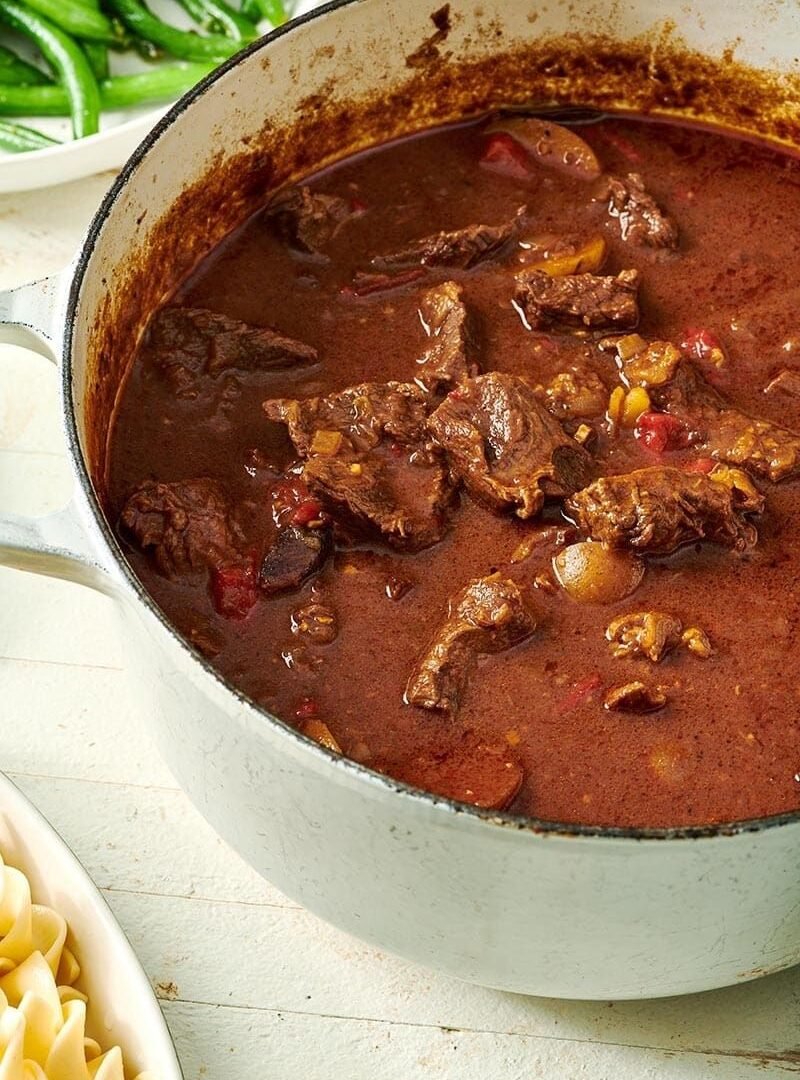
Hungarian pörkölt is closer to a thick meat stew, while goulash soup has considerably more liquid and is served as a hearty soup.
🇭🇺 A Taste of Hungarian History
Gulyásleves is deeply connected to Hungary’s pastoral traditions. The name comes from gulyás, referring historically to cattle herders.
The dish evolved from simple outdoor cooking into one of Hungary’s most recognizable national foods.
Today, goulash soup is enjoyed in homes, restaurants, festivals, and family gatherings throughout Hungary.
❓ Frequently Asked Questions
Can I make Hungarian goulash soup in a slow cooker?
Yes. Brown the onions, paprika, and beef first, then transfer everything to the slow cooker. Add the vegetables later if you want them to retain more texture.
Can I make it spicy?
Absolutely. Add hot Hungarian paprika or a fresh hot pepper according to your preference.
Can I freeze Gulyásleves?
Yes. Allow it to cool completely before freezing in airtight containers. The potatoes may become slightly softer after thawing.
Does authentic Hungarian goulash contain noodles?
Some traditional versions contain csipetke, tiny pinched noodles or dumplings. Others are made without them.
❤️ Final Thoughts
Hungarian Goulash Soup (Gulyásleves) is one of the best-known dishes in Hungarian cuisine for good reason. Tender beef, sweet onions, earthy paprika, potatoes, carrots, and aromatic spices slowly come together in a rich and comforting broth.
To provide the best experiences, we use technologies like cookies to store and/or access device information. Consenting to these technologies will allow us to process data such as browsing behavior or unique IDs on this site. Not consenting or withdrawing consent, may adversely affect certain features and functions.
Functional
Always active
The technical storage or access is strictly necessary for the legitimate purpose of enabling the use of a specific service explicitly requested by the subscriber or user, or for the sole purpose of carrying out the transmission of a communication over an electronic communications network.
Preferences
The technical storage or access is necessary for the legitimate purpose of storing preferences that are not requested by the subscriber or user.
Statistics
The technical storage or access that is used exclusively for statistical purposes.The technical storage or access that is used exclusively for anonymous statistical purposes. Without a subpoena, voluntary compliance on the part of your Internet Service Provider, or additional records from a third party, information stored or retrieved for this purpose alone cannot usually be used to identify you.
Marketing
The technical storage or access is required to create user profiles to send advertising, or to track the user on a website or across several websites for similar marketing purposes.