Remove excess fat, membranes, and the tougher bronchial passages from the lung.
Rinse everything well under cold running water.
Because organ meats require careful preparation, purchase them from a reliable source and follow appropriate food-safety practices.
2. Cook the Lung and Heart
Place the lung and heart in a large pot.
Add enough water to cover them.
Add the onion, bay leaves, whole peppercorns, and salt.
Bring the liquid to a simmer and cook gently until the offal is tender.
Traditional recipes vary in cooking time, but the process can take around 1½–2½ hours, depending on the ingredients and size of the pieces.
3. Cool and Slice
Remove the cooked lung and heart from the cooking liquid.
Allow them to cool enough to handle.
Cut the meat into thin strips.
Strain and reserve the cooking liquid—it will become an important part of the sauce.
4. Make the Base
Heat the oil or lard in a large saucepan.
Add finely chopped onion and cook until softened.
For a traditional sweet-sour character, add a small amount of sugar and allow it to caramelize lightly.
Stir in the flour to create a light roux.
Remove the pan briefly from the heat and stir in the paprika so it does not burn.
5. Build the Sauce
Gradually add some of the reserved cooking liquid while whisking continuously.
Continue stirring until you have a smooth sauce.
Depending on the recipe, cooked carrots or parsley root can be blended into the sauce to give it additional flavor and body.
6. Add the Meat
Return the sliced lung and heart to the sauce.
Add the bay leaf if using, along with mustard, black pepper, and lemon zest.
Simmer gently for approximately 20–30 minutes, allowing the flavors to combine.
7. Add the Sour Cream
Lower the heat.
Stir the sour cream into the sauce.
Add lemon juice gradually, tasting as you go.
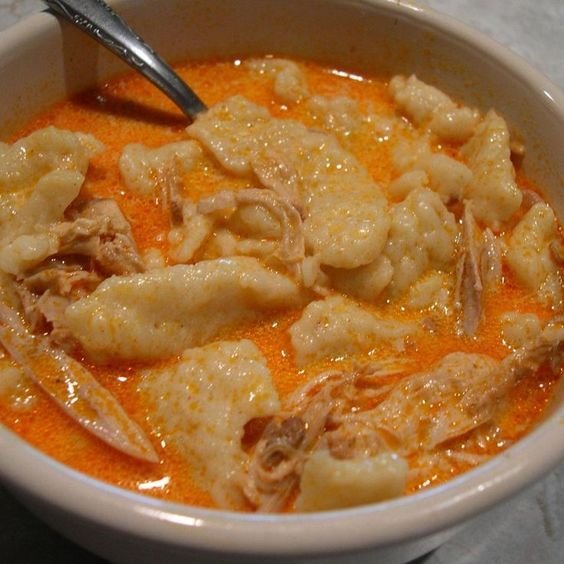
The finished sauce should be creamy, savory, and pleasantly tangy rather than overwhelmingly sour.
Some traditional recipes also use a little vinegar or finely chopped pickled cucumber for additional acidity.
The Secret Is the Sweet-and-Sour Balance
One of the defining characteristics of szalontüdő is the balance between different flavors.
The sauce combines:
Savory meat and cooking stock
Creamy sour cream
Sweet paprika
Mustard
Lemon or vinegar
A touch of sweetness
Aromatic bay leaf and pepper
The result is a complex sauce that is much more interesting than a simple creamy gravy.
What to Serve With Szalontüdő
The traditional accompaniment is zsemlegombóc, a soft bread dumpling.
The dumplings are particularly well suited to this dish because they absorb the rich sour cream sauce.
Other options include:
Bread dumplings
Fresh crusty bread
Boiled potatoes
Noodles
Simple pasta
Zsemlegombóc remains one of the most traditional choices.
Tips for Making Szalontüdő
Clean the Offal Carefully
Proper preparation is essential for both texture and flavor. Remove tough membranes and unwanted parts before cooking.
Don’t Rush the Cooking
The lung and heart need sufficient time to become tender.
Keep the Sauce Smooth
Add the cooking liquid gradually to the roux while stirring to avoid lumps.
Add Sour Cream Carefully
Avoid aggressively boiling the sauce after adding sour cream. Gentle heating helps preserve its creamy texture.
Adjust the Acidity Gradually
Lemon juice, vinegar, mustard, and pickles can all contribute acidity. Add them little by little until the balance tastes right.
Can Szalontüdő Be Made Ahead?
Yes. Like many traditional Hungarian stews and ragouts, szalontüdő can be prepared ahead of time.
After cooling, refrigerate it properly and gently reheat before serving.
Some traditional recipes specifically note that the dish freezes well, making a larger batch practical.
Is Szalontüdő an Everyday Dish?
Today, szalontüdő is much less common than Hungary’s internationally famous dishes such as goulash and chicken paprikash.
Its use of organ meats makes it a more unusual recipe for modern cooks, but it remains an interesting part of Hungarian culinary heritage.
For anyone interested in authentic Hungarian cooking, it offers a glimpse into an older style of cuisine where cooks used a wider range of ingredients and transformed inexpensive cuts into flavorful, satisfying meals.
Hungarian Szalontüdő Recipe
Prep Time: 30 minutes Cooking Time: 2–2½ hours Sauce Preparation: 30 minutes Total Time: About 3 hours Servings: 6
Frequently Asked Questions
What does Szalontüdő mean?
The name refers to a traditional Hungarian preparation of lung, generally served as a sour, creamy ragout.
What is Pájsli?
Pájsli is another name commonly associated with szalontüdő. The dish is also called savanyú tüdő, meaning “sour lung.”
Does it taste strongly of liver?
Traditional szalontüdő is based primarily on lung and heart rather than liver. Its final character comes largely from the seasoned, tangy sauce.
What is the traditional side dish?
Zsemlegombóc, or bread dumplings, is one of the classic accompaniments.
Final Thoughts
Hungarian Szalontüdő may not be the most familiar Hungarian recipe, but it is certainly one of the country’s more distinctive culinary traditions.
To provide the best experiences, we use technologies like cookies to store and/or access device information. Consenting to these technologies will allow us to process data such as browsing behavior or unique IDs on this site. Not consenting or withdrawing consent, may adversely affect certain features and functions.
Functional
Always active
The technical storage or access is strictly necessary for the legitimate purpose of enabling the use of a specific service explicitly requested by the subscriber or user, or for the sole purpose of carrying out the transmission of a communication over an electronic communications network.
Preferences
The technical storage or access is necessary for the legitimate purpose of storing preferences that are not requested by the subscriber or user.
Statistics
The technical storage or access that is used exclusively for statistical purposes.The technical storage or access that is used exclusively for anonymous statistical purposes. Without a subpoena, voluntary compliance on the part of your Internet Service Provider, or additional records from a third party, information stored or retrieved for this purpose alone cannot usually be used to identify you.
Marketing
The technical storage or access is required to create user profiles to send advertising, or to track the user on a website or across several websites for similar marketing purposes.