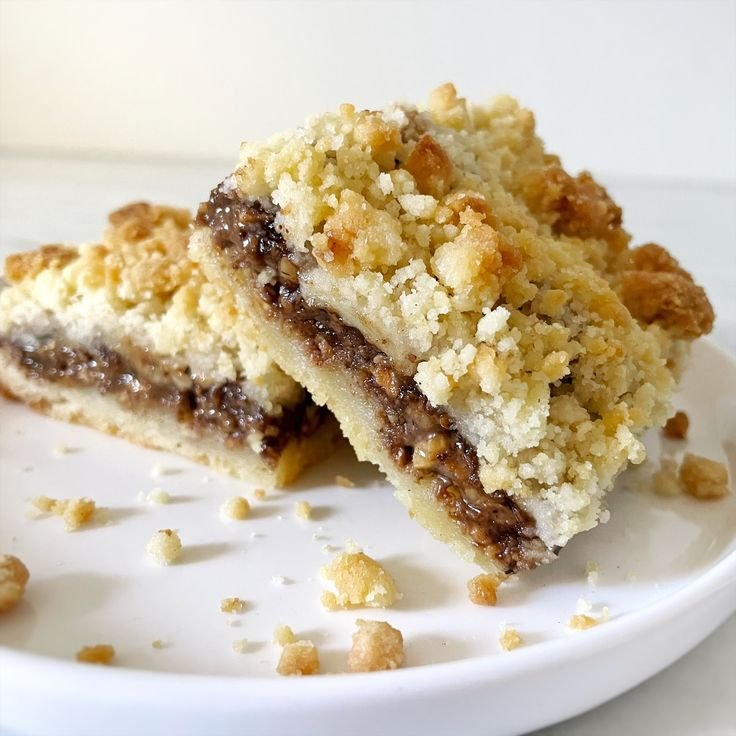
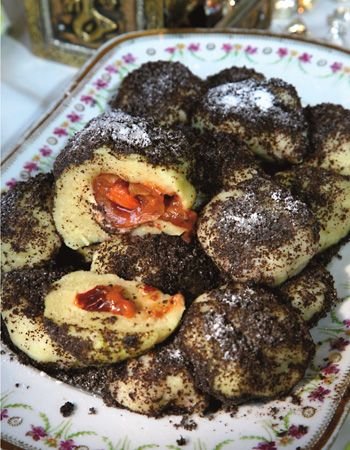
Hungarian Jam-Filled Pastry Cookies (Lekváros Papucs)
Instructions
1. Prepare the Dough
In a large bowl, combine the flour, sugar, and salt.
Add the softened butter and work it into the flour with your fingertips until the mixture resembles coarse crumbs.
Add the egg yolks, sour cream, and vanilla extract.
Mix until a soft, smooth dough forms.
If the dough feels too sticky, add a small amount of flour.
2. Chill the Dough
Shape the dough into a ball, wrap it, and refrigerate for approximately 30–60 minutes.
Chilling makes the pastry easier to roll and helps create a tender texture.
3. Roll and Cut
Preheat the oven to 350°F (175°C).
Roll the chilled dough out on a lightly floured surface to about ⅛ inch (3 mm) thick.
Cut the dough into small circles or squares, depending on the shape you prefer.
4. Add the Filling
Place a small spoonful of thick jam in the center of each piece of dough.
Do not overfill—the jam can escape during baking.
Fold the dough over the filling to create a half-moon or slipper shape.
Press the edges firmly together, then crimp them with a fork or decorative pastry cutter.
5. Bake
Arrange the filled pastries on a parchment-lined baking sheet.
Bake for approximately 18–25 minutes, or until lightly golden around the edges.
The pastries should remain relatively pale rather than becoming deeply brown.
6. Finish With Sugar
Allow the pastries to cool slightly.
While still warm, generously dust them with powdered sugar.
Serve once completely cooled or enjoy them slightly warm.
Choosing the Right Filling
Traditional Hungarian pastries often make wonderful use of thick fruit preserves.
Try:
Apricot jam – sweet and classic
Plum jam – rich and slightly tart
Sour cherry jam – bright and fruity
Raspberry jam – intensely flavorful
Quince preserves – fragrant and slightly tangy
The important thing is to use a thick jam or preserve so it stays inside the pastry while baking.
Tips for Perfect Pastries
Don’t overfill them. A little jam goes a long way.
Chill the dough. Cold pastry is easier to shape and helps prevent excessive spreading.
Seal the edges carefully. Press firmly around the filling before crimping.
Use thick preserves. Runny jam can leak during baking.
Don’t overbake. These pastries are best when the dough remains tender and lightly golden.
Add plenty of powdered sugar. The sweet finish complements the slightly buttery pastry beautifully.
A Traditional Hungarian Treat
Hungarian baking is filled with pastries that combine simple doughs with fruit preserves, nuts, poppy seeds, and other flavorful fillings.
These little folded pastries are especially appealing because they are easy to portion and can be prepared for holidays, family gatherings, afternoon coffee, or simply as a homemade weekend treat.
Their small size also makes them perfect for serving on a dessert platter alongside other Hungarian cookies and pastries.
How to Serve
Serve these pastries with:
Hot coffee
Hungarian tea
Black tea
Hot chocolate
A glass of cold milk
For a beautiful dessert platter, arrange them together with other traditional Hungarian sweets and finish everything with a light snowfall of powdered sugar.
Storage
Store completely cooled pastries in an airtight container at room temperature for several days.
For longer storage, they can be frozen in a sealed container. Thaw at room temperature and dust with additional powdered sugar before serving.
These Hungarian Jam-Filled Pastry Cookies are wonderfully simple yet incredibly inviting. The tender pastry, sweet fruit filling, and generous coating of powdered sugar create the kind of old-fashioned treat that disappears quickly from a dessert plate.
Make a batch with apricot or plum jam, put the kettle on, and enjoy a little taste of Hungarian baking at home. 🇭🇺❤️
To provide the best experiences, we use technologies like cookies to store and/or access device information. Consenting to these technologies will allow us to process data such as browsing behavior or unique IDs on this site. Not consenting or withdrawing consent, may adversely affect certain features and functions.
Functional
Always active
The technical storage or access is strictly necessary for the legitimate purpose of enabling the use of a specific service explicitly requested by the subscriber or user, or for the sole purpose of carrying out the transmission of a communication over an electronic communications network.
Preferences
The technical storage or access is necessary for the legitimate purpose of storing preferences that are not requested by the subscriber or user.
Statistics
The technical storage or access that is used exclusively for statistical purposes.The technical storage or access that is used exclusively for anonymous statistical purposes. Without a subpoena, voluntary compliance on the part of your Internet Service Provider, or additional records from a third party, information stored or retrieved for this purpose alone cannot usually be used to identify you.
Marketing
The technical storage or access is required to create user profiles to send advertising, or to track the user on a website or across several websites for similar marketing purposes.